
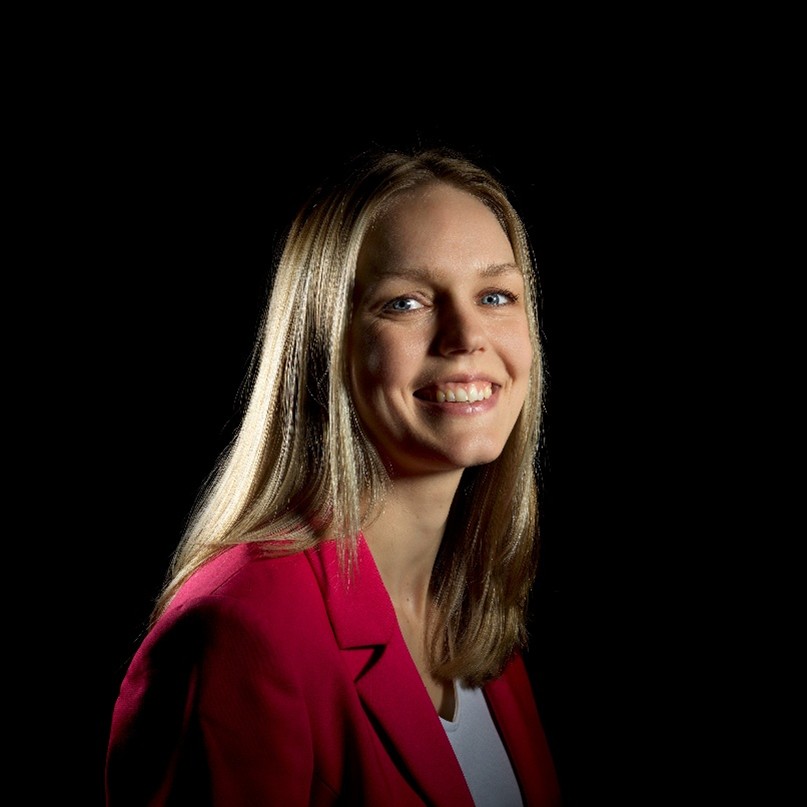
Functie
GZ-psycholoog i.o.
Persoonlijke achtergrond
Mijn loopbaan begon bij de Viersprong als onderzoeksassistent, waarna ik als psycholoog werkzaam was op de intake- en diagnostiekafdeling. In totaal heb ik acht jaar ervaring opgedaan in de diagnostiek, met een sterke focus op persoonlijkheidsdiagnostiek en in het bijzonder Therapeutisch Psychologisch Onderzoek (TPO).
Naast mijn klinische werkzaamheden heb ik mij altijd beziggehouden met wetenschappelijk onderzoek. In 2017 startte ik als promovenda en deed ik onderzoek naar het Alternatieve Model voor Persoonlijkheidsstoornissen (AMPD). Ik was onder andere betrokken bij de eerste valideringsstudie van de STiP 5.1, de ontwikkeling van de LPFS-BF 2.0 en onderzoek naar de klinische bruikbaarheid van het AMPD. Daarnaast heb ik bijgedragen aan de implementatie van het AMPD binnen de intakeprocedure van de Viersprong. In 2024 promoveerde ik aan de Universiteit van Amsterdam.
Het combineren van wetenschappelijk onderzoek met de klinische praktijk past goed bij mij en vormt een rode draad in mijn werk.
Motivatie om te trainen
Tijdens mijn promotietraject raakte ik betrokken bij het geven van trainingen over de STiP 5.1 en het AMPD. Ik vind het leuk om collega’s te enthousiasmeren voor dit model, de theoretische achtergrond en klinische toepassing toe te lichten en recente wetenschappelijke inzichten te bespreken. In mijn trainingen combineer ik inhoudelijke diepgang met ruimte voor reflectie en uitwisseling. Ik word vaak omschreven als rustig en deskundig, en vind het belangrijk om samen in gesprek te gaan.
Weetje
Ik word blij van het vertalen van complexe wetenschappelijke modellen naar iets wat in de spreekkamer echt helpend is.
Lidmaatschap(pen)
The European Society for the Study of Personality Disorders (ESSPD) en het Therapeutic Assessment Institute (TAI). Daarnaast ben ik junior schematherapeut.
Publicaties
- Hutsebaut, J., Kamphuis, J. H., Feenstra, D. J., Weekers, L. C., & De Saeger, H. (2017). Assessing DSM–5-oriented level of personality functioning: Development and psychometric evaluation of the Semi-Structured Interview for Personality Functioning DSM–5 (STiP-5.1). Personality Disorders: Theory, Research, and Treatment, 8(1), 94.
- Hutsebaut, J., Weekers, L. C., Tuin, N., Apeldoorn, J. S., & Bulten, E. (2021). Assessment of ICD-11 Personality Disorder Severity in Forensic Patients Using the Semi-Structured Interview for Personality Functioning DSM-5 (STiP5.1): preliminary findings. Frontiers in Psychiatry, 12, 617702.
- Rossi, G., Weekers, L. C., & Hutsebaut, J. (2021). Resilient , undercontrolled , and overcontrolled personality types based upon DSM-5 maladaptive personality traits. Heliyon, 7(5), e06938.
- Stefana, A., Ünver, B., Barlati, S., Weekers, L. C., & Hopwood, C. J. (2026). The Mini Version of the Level of Personality Functioning Scale (mini-LPFS): Development and Validation in Two Clinical Sample. Journal of Personality Assessment.
- Van Oenen, J., Weekers, L. C., Paap, M. C. S., & Hutsebaut, J. (submitted). Comparing the clinical utility of case formulations of the DSM-5 Alternative Model for Personality Disorders versus Section II Model for personality disorders. Personality Disorders: Theory, Research, and Treatment.
- Weekers, L.C., Hutsebaut, J., Bach, B., and Kamphuis, J.H. (2020). Scripting the DSM-5 Alternative Model for Personality Disorders assessment procedure: A clinically feasible multi-informant multimethod approach. Personality and Mental Health, 14(3), 304-318.
- Weekers, L. C., Hutsebaut, J., De Saeger, H., & Kamphuis, J. H. (2024). Comparing the clinical utility of the Alternative Model for Personality Disorders to the Section II personality disorder model: A Randomized Controlled Trial. Personality Disorders: Theory, Research, and Treatment.
- Weekers, L. C., Hutsebaut, J. & Kamphuis, J. H. (2018). The Level of Personality Functioning Scale – Brief Form 2.0 (LPFS-BF 2.0): Update of a brief instrument for assessing level of personality functioning. Personality and Mental Health, 13, 3-14.
- Weekers, L. C., Hutsebaut, J., Kamphuis, J. H. (2021). Client and Clinical Utility of the Assessment of Personality Disorders. Journal of Nervous and Mental Disorders, 209, 846-850.
- Weekers, L. C., Hutsebaut, J., Rovers, J. M. C., & Kamphuis, J. H. (2023). Head to head comparison of the Alternative Model for Personality Disorders and Section II personality disorder model in terms of predicting patient outcomes one year later. Personality Disorders: Theory, Research, and Treatment.
- Weekers, L. C., Hutsebaut, J., Zimmermann, J., & Kamphuis, J. H. (2021). Changes in the classification of personality disorders: Comparing the DSM–5 Section II personality disorder model to the alternative model for personality disorders using structured clinical interviews. Personality Disorders: Theory, Research, and Treatment.
- Weekers, L. C., Sellbom, M., Hutsebaut, J., Simonsen, S., & Bach, B. (2022). Normative data for the LPFS-BF 2.0 derived from the Danish general population and relationship with psychosocial impairment. Personality and Mental Health.
- Weekers, L. C., Verhoeff, S. C. E., Kamphuis, J. H., & Hutsebaut, J. (2020). Assessing Criterion A in Adolescents Using the Semistructured Interview for Personality Functioning DSM – 5. Personality Disorders : Theory , Research , and Treatment, 12(4), 312-319.